
Hardwood Floor Stains: The Same Color Doesn't Mean the Same Result

DuraSeal, Minwax, Bona, LOBA, Basic Coatings, and Rubio Monocoat all offer ways to change the color of hardwood floors. But their products don't necessarily work the same way, and comparing them by color alone misses quite a bit.
We've used all of these manufacturers at Brazilian Floors. We tend to favor DuraSeal, Minwax, Bona, and Rubio, depending on the project. We don't have a universal favorite, nor do we believe one type of stain is appropriate for every floor.
The differences begin with what goes into the product.
Oil-Based Stains
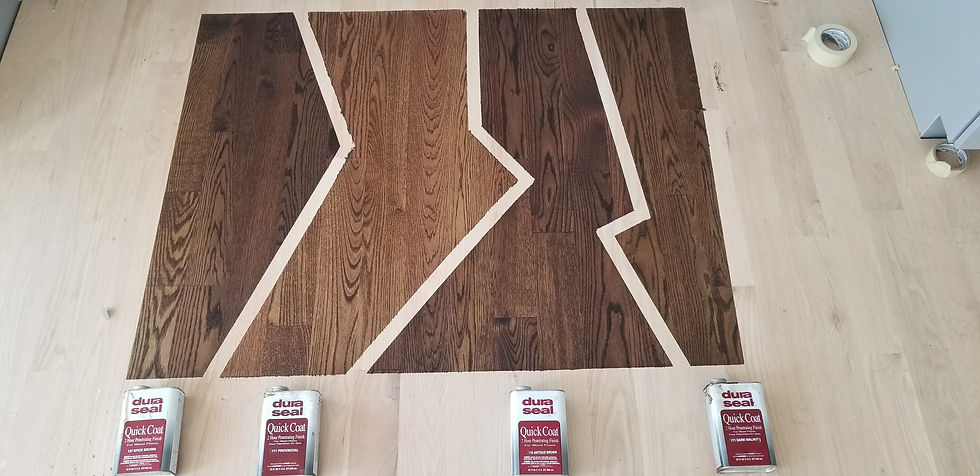
DuraSeal Quick Coat, Minwax Wood Finish, and Bona DriFast are familiar choices for staining hardwood floors.
These products use oil-based or oil-modified formulations. They penetrate the wood to produce color and can be followed by compatible protective finishes.
Bona DriFast, for example, can be used beneath approved waterborne Bona finishes. An oil-based stain doesn't automatically require an oil-based polyurethane.
Working time, drying, and the ability to blend sections vary by product. The temperature, humidity, wood species, and color selected also influence the results.
A dark stain that isn't completely dry before finishing can become a much bigger problem than waiting another day.
Water-Based, Hybrid, and Alcohol-Based Stains
These are different categories, and they shouldn't be confused.
Water-based stains generally dry faster than traditional oil-based stains. Their application may require quicker work, particularly when maintaining consistent color across large areas.
Basic Coatings HyperTone is a water/oil hybrid stain, designed to provide color before an approved Basic Coatings sealer and finish. It isn't alcohol-based.
LOBA Stain is alcohol-based. It's designed for hardwood flooring, with a manufacturer-stated drying time of approximately one hour under suitable conditions. LOBA also designed it to be compatible with its approved waterborne finishes and oil systems.
The distinction matters. A quick-drying alcohol-based product doesn't necessarily behave like a conventional water-based stain, and a water/oil hybrid isn't simply another oil stain.
The manufacturer's application and finishing instructions determine how each system should be used.
Natural Oils: Color and Protection Together

Rubio Monocoat Oil Plus 2C and LOBA 2K ImpactOil Color take a different approach.
These are oil finishing systems that color and protect the wood rather than conventional stains normally covered with polyurethane.
They can produce an attractive, natural appearance, but the maintenance requirements are different.
Localized repairs may be possible, depending on the damage and surrounding conditions. However, that doesn't guarantee an invisible repair.
Cleaning products, wear, sunlight, and previous maintenance all influence how the floor will look years later.
Choosing these systems means choosing their maintenance procedures as well.
Preparation Makes or Breaks the Color
The same stain applied to red oak, white oak, and maple won't produce the same appearance.
Wood species, grain, natural color, and how the surface was sanded affect the final result.
The National Wood Flooring Association recognizes inconsistent sanding, improper water-popping, and uneven application among the causes of color problems.
Darker stains can make sanding marks particularly noticeable.
Water-popping may help certain stains produce deeper or more consistent color, but the procedure must be controlled. It's not something to apply automatically to every floor or every product.
We've rarely encountered major staining failures. Proper sanding, preparation, and following the manufacturer's instructions have a great deal to do with that.
A more expensive stain won't compensate for a poorly prepared floor.
The Color Sample Isn't Your House

A small sample can look excellent in a showroom and completely different across a large living room.
Natural light changes throughout the day. Artificial lighting changes how warm or cool the color appears. Cabinets, wall colors, furniture, and the wood's grain also influence the result.
The finish matters, too. A clear waterborne finish may preserve a different appearance than an ambering oil-based polyurethane.
Before approving a color, test it on the actual flooring and include the proposed finishing system.
And don't assume a photograph from Pinterest represents the species, stain, or finish you plan to use.
Cost and Future Repairs
The material price is only part of the cost.
Some systems require additional preparation, different application procedures, more finishing steps, or longer waiting periods. Their maintenance requirements can also vary.
Future repairs deserve attention. Matching an existing stained floor can be difficult even when the original product and color are known.
Wood changes with age and exposure to light. Previous cleaning and treatments can affect the appearance. A newly stained replacement board may not match the surrounding flooring.
We recommend choosing the stain and finish together, based on the wood, the appearance you're after, and how the floor will be used.
There's little value in getting exactly the color you wanted if the finishing system isn't appropriate for the floor.


